A second-hand Riello burner can look like a smart saving, but it is only a good buy if you can confirm its model, its age and the condition of its safety parts. If the rating plate is missing, the burner does not match your boiler, or key safety components are near the end of their life, a new burner usually costs less over time. This guide explains what to check, so you can decide with confidence.
What is the real difference between a new and a used burner?
On the outside, a used burner and a new one can look almost the same. The difference is hidden inside. A burner that has run for years has worn parts, an unknown service history and, very often, settings made for a different boiler.
In short, a new burner gives you:
- A known model and full rating plate data
- All safety components at the start of their life
- The original instruction manual and wiring diagram
- A clear starting point for setting combustion on your boiler
A used burner, on the other hand, comes with questions. The rest of this guide shows how to answer them.
What should you check on a second-hand Riello burner before you pay?
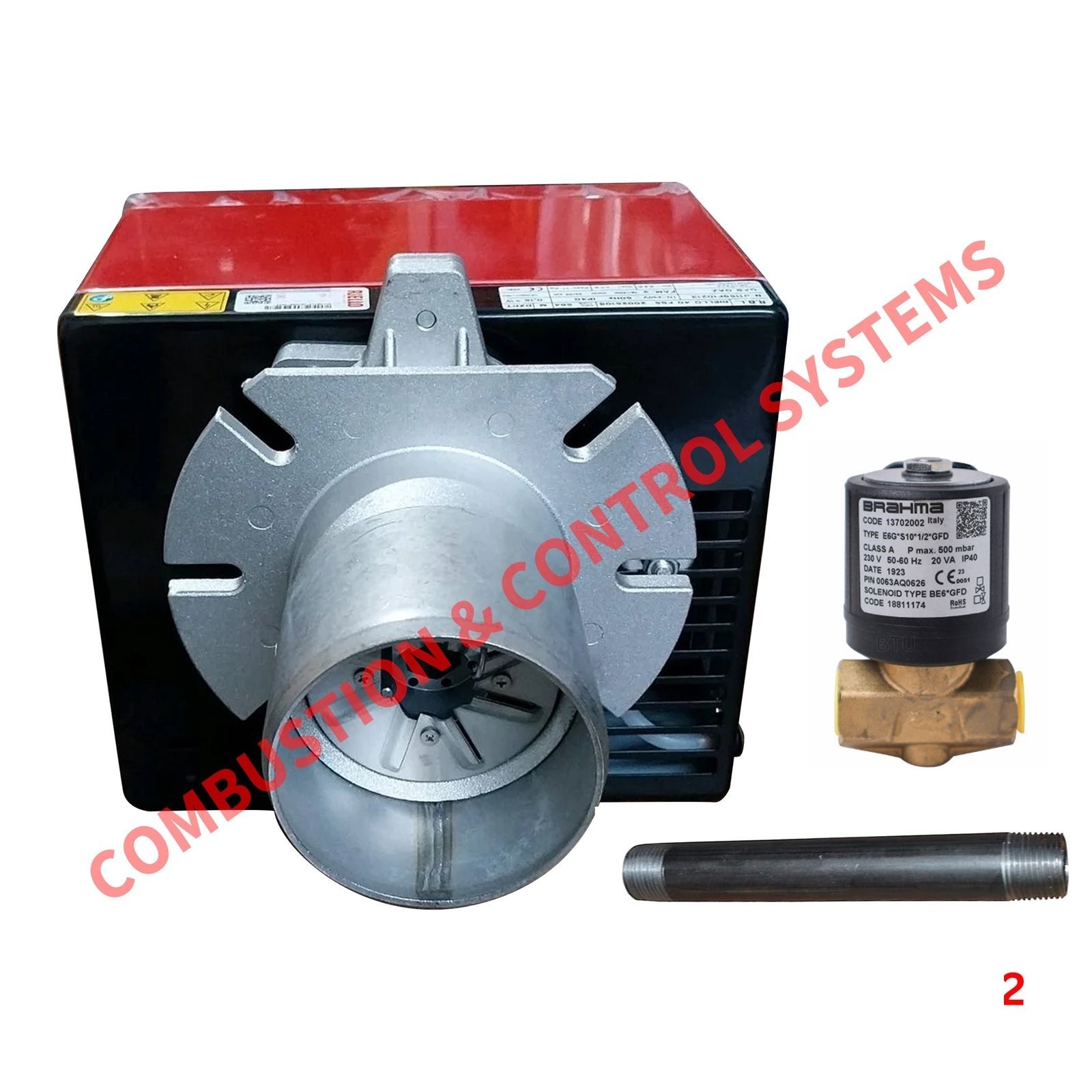
Start with the rating plate. Riello’s manuals state that the identification plate gives the burner’s serial number, model and main technical data. They also warn that if the plate is tampered with, removed or missing, the burner cannot be clearly identified, which makes installation and maintenance difficult and potentially dangerous.
So, before you agree on a price for a second-hand Riello burner, check these points:
- Rating plate: it should be present, readable and show the model, type and serial number. The plate also carries the year of manufacture in coded form.
- Model and output: confirm the kW range on the plate, not just what the seller says.
- Fuel type: a gas burner and an oil burner are different machines. For gas, check whether it is set up for natural gas (PNG) or LPG.
- Control box and flame sensor: note their model codes and condition. These are the heart of the safety system.
- Gas train or oil pump: check whether it is included, which brand it is and whether it suits your supply pressure.
- Manual and wiring diagram: Riello says the manual is part of the product and should go with the burner, even when it changes owner.
- Visible condition: look for cracked cables, burnt electrodes, a damaged combustion head or signs of overheating.
How old is too old? Riello’s safety part life cycles
Age matters more than appearance. Riello’s 40 FS manuals list a life cycle for each safety component and say they must be replaced when that life ends. The table below shows the figures given for gas burners.
| Safety component | Life cycle given by Riello |
|---|---|
| Flame control (control box) | 10 years or 250,000 operation cycles |
| Flame sensor | 10 years or 250,000 operation cycles |
| Gas valves (solenoid) | 10 years or 250,000 operation cycles |
| Pressure switches | 10 years or 250,000 operation cycles |
| Pressure adjuster | 15 years |
| Fan impeller | 10 years or 500,000 start-ups |
In other words, a burner that has worked for close to ten years may need a new control box, flame sensor, gas valves and pressure switches straight away. Because a busy burner can reach 250,000 cycles well before ten years, ask how many hours a day it ran, too. Our Riello gas burner maintenance checklist explains how these parts are checked during service.
Will a used burner actually fit your boiler?
Even a burner in good condition is the wrong buy if it does not match your equipment. Check three things:
- Output: your boiler or oven’s heat input must fall inside the burner’s kW range. An oversized burner switches on and off too often and wastes fuel. Our Riello burner sizing guide shows how to work this out from your rating plate.
- Fuel and pressure: the gas train must suit your gas type and supply pressure. Riello’s 40 FS manual notes that a separate kit is needed to run these burners on LPG.
- Mounting: the flange and blast tube must fit your boiler front plate and combustion chamber.
As a result, a “bargain” burner sometimes needs a new gas train, a different head setting or adapter work before it can run safely.
What does a second-hand Riello burner really cost?
The purchase price is only the first line of the bill. To compare fairly, add up:
- Replacement safety parts that are at or near the end of their life cycle
- Wear parts such as electrodes, nozzles, photocells or ionisation probes
- A gas train or oil pump, if it is missing or does not suit your supply
- Technician time for installation, commissioning and combustion setting
- Downtime if the burner fails soon after installation
Riello’s manuals also state that the manufacturer accepts no responsibility for damage caused by non-original parts. So, if a used burner has been repaired with local substitutes, factor in the cost of putting genuine parts back. Once you add these items, the gap between a second-hand Riello burner and a new one is often much smaller than it first looks. Our guide to Riello burner price in India explains what goes into a fair quote for a new burner.
When does a new Riello burner make more sense?
A used burner can work as a short-term stopgap, for example when a known, well-maintained unit is moved within the same plant. However, a new burner is usually the better choice when:
- The rating plate is missing, damaged or unreadable
- The burner is close to ten years old or ran on long daily shifts
- There is no service history or manual
- The model’s output, fuel or mounting does not match your boiler
- Your plant cannot afford unplanned shutdowns
For small boilers and ovens, compact models such as the Riello 40 FS10 and FS20 with Brahma EG12 SR GMO valve are a common new-burner choice. If you decide to keep an existing burner running instead, genuine spares such as the Riello CMG88.62D2 control box help restore its safety system.
Buy a Riello burner in Mumbai
Riello industrial oil and gas burners (Combustion & Control Systems) has been in burners and combustion systems since 1996. We supply Riello gas and oil burners, gas train parts and genuine Riello spare parts to plants across Mumbai and India.
Address: Gala No. 204, B Block, Prime Trade Center, Waliv Phata, Sativali Road, Vasai (E) – 401208, Maharashtra (Mumbai region).
Send us your boiler or oven rating plate, your fuel type and, if you are weighing up a used unit, a photo of its rating plate. We will help you compare the options. Ask for a Riello burner price on WhatsApp.
Frequently asked questions
Is it safe to buy a second-hand Riello burner?
It can be, if the rating plate is intact, the model suits your boiler and the safety parts are checked or replaced. A qualified technician should inspect and commission it before use.
How can I tell the age of a used Riello burner?
Check the rating plate. Riello shows the serial number and a coded year of manufacture on it. If the plate is missing, the burner’s age and model cannot be confirmed.
Which parts should be replaced on an old burner?
Riello lists a life of 10 years or 250,000 cycles for the control box, flame sensor, gas valves and pressure switches. Parts past that limit should be replaced.
Can a used gas burner run on LPG instead of PNG?
Only with the correct setup. Riello’s 40 FS manual says a separate kit is needed for LPG, and the gas train must suit LPG pressures as well.
Is a new burner always more expensive overall?
Not always. Once you add replacement safety parts, missing gas train components and commissioning, a new burner can work out close in cost, with far fewer unknowns.