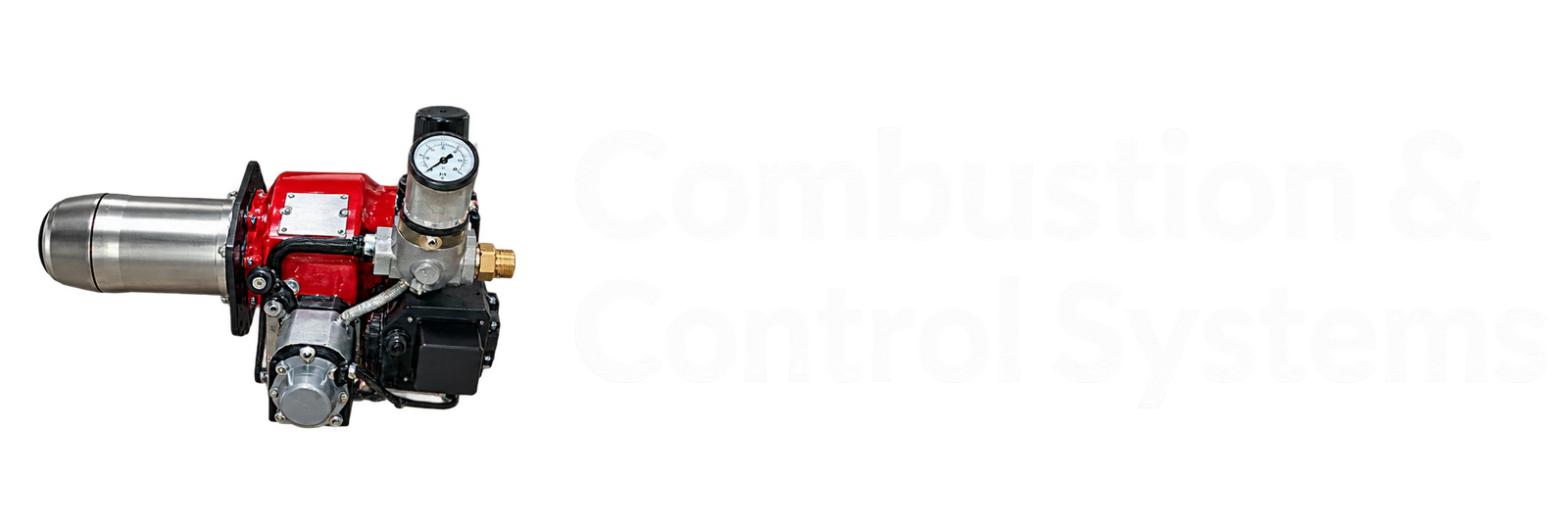
Riello gas burner maintenance is a mix of quick daily checks by the operator, regular cleaning and inspection every week or month, and a full yearly service by a trained technician. Riello’s manuals ask for the gas combustion system to be checked at least once a year. However, simple routine checks in between catch most problems before they turn into a lockout or a production stop.

Why does a gas burner need a maintenance checklist?
A gas burner on a boiler, oven or dryer starts and stops many times a day. Each start puts a little wear on the ignition electrode, the gas valves, the pressure switches and the control box. Meanwhile, dust from the plant is pulled into the fan, and the gas filter slowly collects dirt from the gas line.
None of this is visible from outside. As a result, burners often run well for months and then stop suddenly. A written checklist turns maintenance into a habit, so small problems are noticed early. In return, you get:
- Fewer unplanned lockouts and shutdowns
- Cleaner combustion and less wasted gas
- Longer life for costly parts such as the control box and gas valves
- A record that helps your technician find faults faster
Daily checks: what should the operator look at?
Daily checks take about five minutes and need no tools. The operator should not open the burner cover or touch the gas train.
- Look at the flame through the sight glass, if your boiler or oven has one. A flame that lifts, flickers heavily or turns yellow needs attention.
- Read the gas pressure gauge before the burner and compare it with the normal reading written in your logbook.
- Check the lockout lamp. If the red lamp came on, note the time and what the burner was doing.
- Listen at start-up for new noises such as rumbling, banging or a delayed light-off.
- Smell for gas near the gas train. If you smell gas, close the gas cock, switch off the burner and ventilate the area.
- Keep the air intake clear of bags, cloth and flour or powder dust.
Weekly and monthly checks for Riello gas burner maintenance
Next comes a slightly deeper check every week or month, depending on running hours. Switch off the power before touching anything near the burner.
- Air intake and fan: check that dust has not built up at the air inlet or inside the fan. Riello’s manuals list this as a maintenance point, because dust reduces air flow and spoils combustion.
- Air damper: make sure the damper has not moved from its set position.
- Gas filter: watch for a falling gas pressure reading at the burner. Riello’s instruction is simple: change the gas filter when it is dirty.
- Wiring and plugs: confirm that the control box plug, the probe cable and the ignition cable are firmly seated and not burnt or cracked.
- Gas leaks: check the joints on the pipe between the gas meter and the burner with leak-detection spray. Never use a flame.
- Logbook review: look for a pattern of lockouts or rising gas use.
In dusty plants such as bakeries, powder coating lines and textile units, do the fan and air intake check more often.
What does the yearly service include?
The yearly service is a job for a trained burner technician with a combustion analyser. Based on the maintenance section of Riello’s 40 FS manuals, it covers:
- Combustion head: inspection for heat damage, deformation, dirt and correct position.
- Electrode and ionisation probe: checking their position against the manual and replacing them if worn. The Riello probe connection for FS5, FS10 and FS20 is a common replacement.
- Pressure switches: confirming the air and gas pressure switches are set correctly.
- Function tests: start-up sequence, ignition, air pressure switch, flame monitoring and tightness of the gas valves.
- Combustion check: measuring CO2, CO, NOx, ionisation current and flue gas temperature.
Ask for the combustion readings in writing and keep them in your logbook. Riello advises comparing them with earlier readings, because a big change shows where to look. For more on what a service visit involves, read our guide to Riello burner service and repair in Mumbai.
When should safety components be replaced?
Some parts are replaced because of age or number of cycles, even if they still seem to work. The Riello 40 FS manuals give these life cycles for safety components:
| Safety component | Life cycle (Riello manual) |
|---|---|
| Flame control (control box) | 10 years or 250,000 operation cycles |
| Flame sensor | 10 years or 250,000 operation cycles |
| Gas valves (solenoid) | 10 years or 250,000 operation cycles |
| Pressure switches | 10 years or 250,000 operation cycles |
| Pressure adjuster (regulator) | 15 years |
| Fan impeller | 10 years or 500,000 start-ups |
Riello points out that these figures are not warranty terms. Also note that a burner on a bakery oven that cycles all day can reach 250,000 cycles long before 10 years. So count starts as well as years. When the control box is due, our guide to the Riello CMG88 62D2 control box explains how to replace it.
What should Riello gas burner maintenance never include?
Some jobs look simple, but they must be left to a qualified technician:
- Bridging control box terminals or bypassing a pressure switch
- Adjusting the gas regulator, gas valve or air damper without a combustion analyser
- Opening the gas valves or any part of the gas train
- Resetting a locked-out burner again and again. Riello warns against more than two resets in a row.
If the same lockout keeps coming back, our guide to Riello burner lockout causes and fixes explains what each fault usually means.
Buy Riello gas burner spare parts in Mumbai
Riello industrial oil and gas burners (Combustion & Control Systems) has been in burners and combustion systems since 1996. We supply Riello gas and oil burners, including the Riello 40 FS5, FS10 and FS20 gas burners with Brahma gas valve, along with the parts that routine Riello gas burner maintenance calls for: CMG88 62D2 control boxes, ionisation probes, Brahma gas solenoid valves, Siemens controls and flame detectors, ignition transformers and Vanaz gas pressure regulators.
Address: Gala No. 204, B Block, Prime Trade Center, Waliv Phata, Sativali Road, Vasai (E) – 401208, Maharashtra (Mumbai region).
Send us your burner model and a photo of its rating plate, and we will help you identify the right part. Get a price on WhatsApp.
Frequently asked questions
How often does a Riello gas burner need servicing?
Riello’s manuals ask for a check at least once a year by a specialised technician. Burners that run long hours or sit in dusty areas usually need checks more often.
Can our operators clean the burner themselves?
Operators can do the daily checks and keep the air intake clean. Opening the burner, cleaning the combustion head and setting combustion should be done by a technician.
How do I know the gas filter is dirty?
Common signs are a lower gas pressure reading at the burner than normal, or lockouts linked to low gas pressure. A technician can confirm it by measuring the pressure before and after the filter.
Is Riello gas burner maintenance different on LPG and PNG?
The routine checks are the same. However, the burner must be set up for the gas in use, and the supply side differs, so the technician checks combustion again after any change of gas.
Which spare parts help reduce downtime?
Parts that wear with every start, such as the ionisation probe and ignition electrode, are worth keeping on the shelf. For critical lines, many plants also keep a spare control box and gas valve coil.